TL;DR
Text reminders only address forgetting, which accounts for just 22% of the reasons patients gave for missing a visit at one FQHC. The remaining 78% are real-life barriers, such as schedule conflicts, illness, work, childcare, and transportation, that a reminder text can’t solve.
Find out what’s in the way days before the visit, and solve it or give the slot to the waitlist. Shorter waits and more open appointments cut no-shows. More reminders don’t.
See how no-show recovery worksWhen a patient misses a visit, the usual fix is another reminder. But most patients miss a visit because something got in their way, and the clinic didn’t find out in time to help.
The problem is growing. In a recent MGMA poll, many medical groups said no-shows had gone up as patients face higher costs. And a missed visit costs the most when the next opening is weeks away. New rheumatology patients wait more than two months on average for a first appointment, and a patient who misses it may wait that long again. A missed follow-up after a hospital stay costs more than the slot, because it can lead to an avoidable ED visit or a readmission.

What patients say when you ask them
A 2024 survey at an FQHC women’s clinic called patients who had missed a visit and asked why. Forgetting was the most common answer. But most patients named something a reminder can’t fix: they were sick, the time didn’t work, or work, childcare, or a ride got in the way.
Why 100 patients missed a scheduled visit
- Forgot the appointment22
- Fell sick18
- Scheduling conflict18
- Work12
- Childcare11
- Transportation9
- Other6
- Cost or insurance4
Staff had picked the appointment time for most of these patients. The researchers point out that a time the patient didn’t choose is more likely to clash with work, childcare, or a ride. They recommend scheduling around the patient: longer hours, same-day appointments, and easy rescheduling.
The reminders reached these patients, but not in a form they used. Moving the visit to video doesn’t remove these barriers either. In rural Louisiana behavioral health clinics, patients missed telehealth visits more often than in-person ones.
What actually lowers no-shows
When a group of addiction treatment programs worked to cut no-shows, their rates nearly halved. Shorter waits and added capacity were linked to the drop. Reminder calls, the most common change, were not.
Most reminder systems send the same message for a routine checkup and for a follow-up after a hospital stay, and they rarely ask why a patient missed. So we match the outreach to the risk of each visit. A patient who always shows up gets a simple confirmation and nothing more. When the risk is higher, the patient gets an easy way to reschedule early, which frees the slot for someone on the waitlist. For the highest-risk visits, and the ones where a miss does real harm, a staff member calls, finds out what is in the way, and arranges the ride or the interpreter.
Measure the visits you recover
A no-show tool that reports messages delivered is reporting activity. The numbers that matter are visits recovered, slots refilled from the waitlist, and staff hours saved, all taken from the EHR. A national benchmark won’t tell you much about your own schedule. Your own baseline will.
We predict no-shows so we can prevent the ones we can and learn from the ones we couldn’t.
Before you buy another reminder tool, ask your team one question: of the visits we lost last month, how many did we know were at risk, and what did we do about them?
 Agentic AICare Adherence: The unaddressed gap
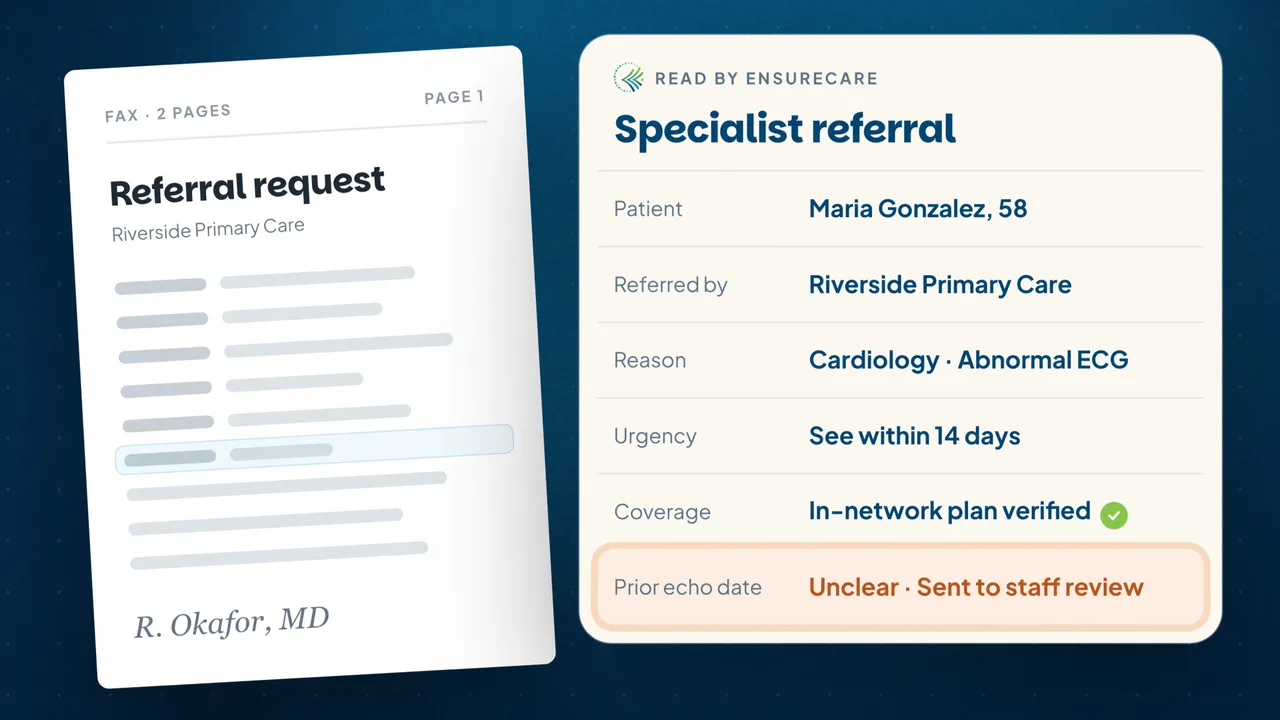 ReferralsHalf of referrals never close the loop. Then comes the friction.
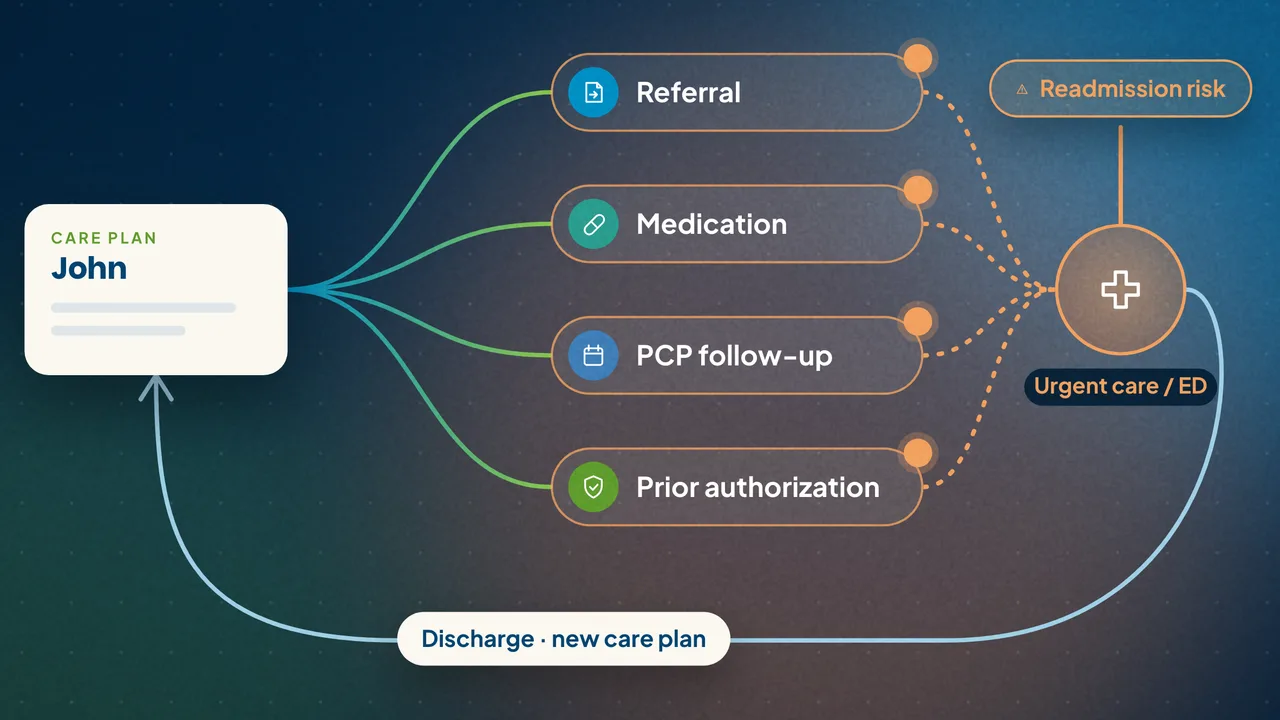 ReadmissionsDischarge is a handoff, not a finish line
 EnsureCare