TL;DR
Many hospitals score readmission risk, and then nobody makes sure the call, the medication review, and the follow-up visit happen after the patient goes home.
Turn each risk score into steps with an owner, such as a call within 72 hours and a follow-up visit within 14 days, and check that each step happened.
See how readmission reduction worksHospitals usually treat readmissions as a prediction problem, where they score the risk and flag the patient. A flag doesn’t help if nobody carries out the discharge plan. High-risk patients often go home with new medications, appointments that aren’t booked yet, and instructions they don’t fully understand, and many can’t tell when their condition is getting worse.
Follow-up is the step with the clearest evidence. A 2025 review of 83 studies found that patients aged 65 and older who saw a clinician within 30 days of discharge were less likely to be readmitted, and an early visit helped most for heart failure and heart attack. A CDC review found a similar link, with the clearest result in heart failure.
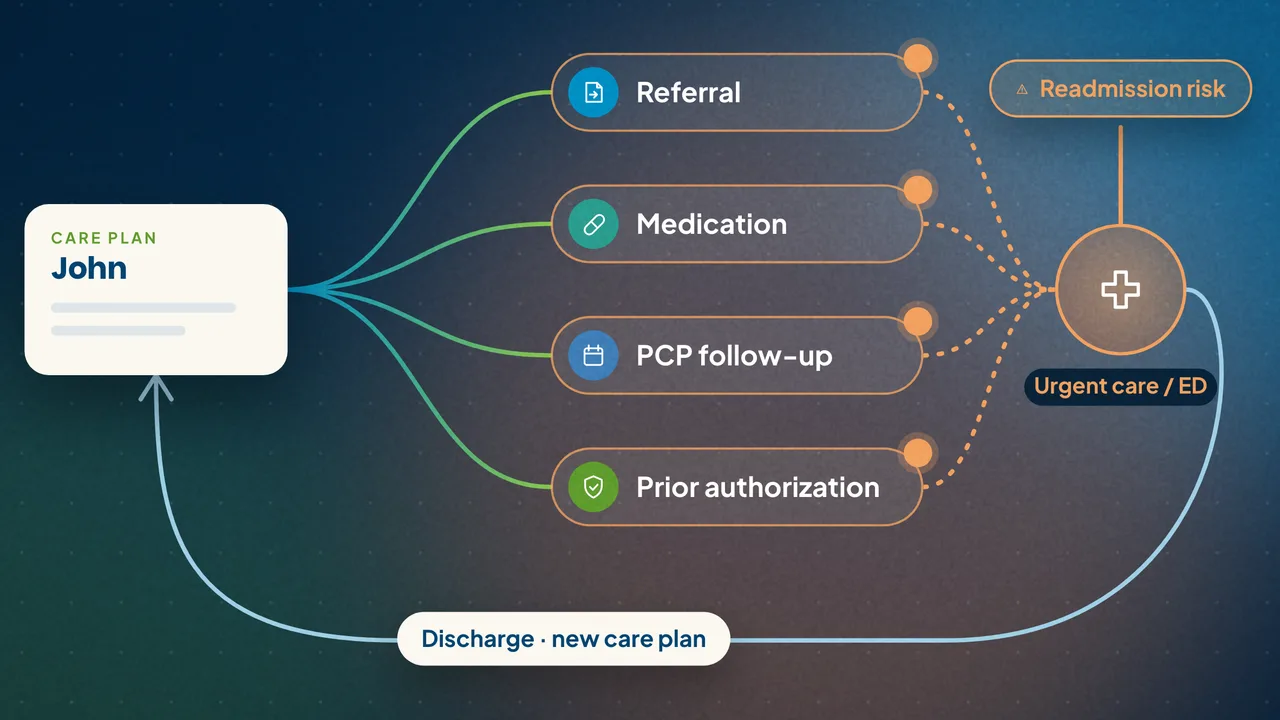
Where discharge follow-up breaks down
In our experience, the discharge plan breaks at the same few steps. The patient leaves before anyone creates a follow-up task, or the 72-hour call happens and staff record it only as a free-text note. The patient doesn’t understand the new medication schedule. The follow-up visit never gets booked, or the patient misses it, which is the no-show problem again.
Give each step an owner
We think hospitals should put their effort into follow-through. Each discharge should start the same set of steps, and someone should own each one.
The steps each discharge starts
- At dischargeEnroll
Add each patient automatically from the hospital’s admission and discharge feed, so nobody drops off the list.
- Within 72 hoursCall
Record the patient’s barriers in structured fields. Answer questions about the new medications, and send confusing cases to a pharmacist.
- Within 7 to 14 daysFollow-up visit
Book the visit, and help the patient get there.
Signs that the patient is getting worse go straight to a nurse.
Measure the steps before the readmission rate
In our experience, readmission rates take three to six months and enough patients to show a trend. Until then, we measure whether each step happened, i.e., whether the 72-hour call took place, whether the patient kept the follow-up visit, and whether staff finished the medication review. Start with one patient group, such as heart failure or COPD, and record the baseline rate of each step before you measure impact.
Ask your team what share of last month’s high-risk discharges got a call within 72 hours, and how many of those patients kept their follow-up visit.
 Agentic AICare Adherence: The unaddressed gap
 No-showsWhy patient no-shows are a coordination failure
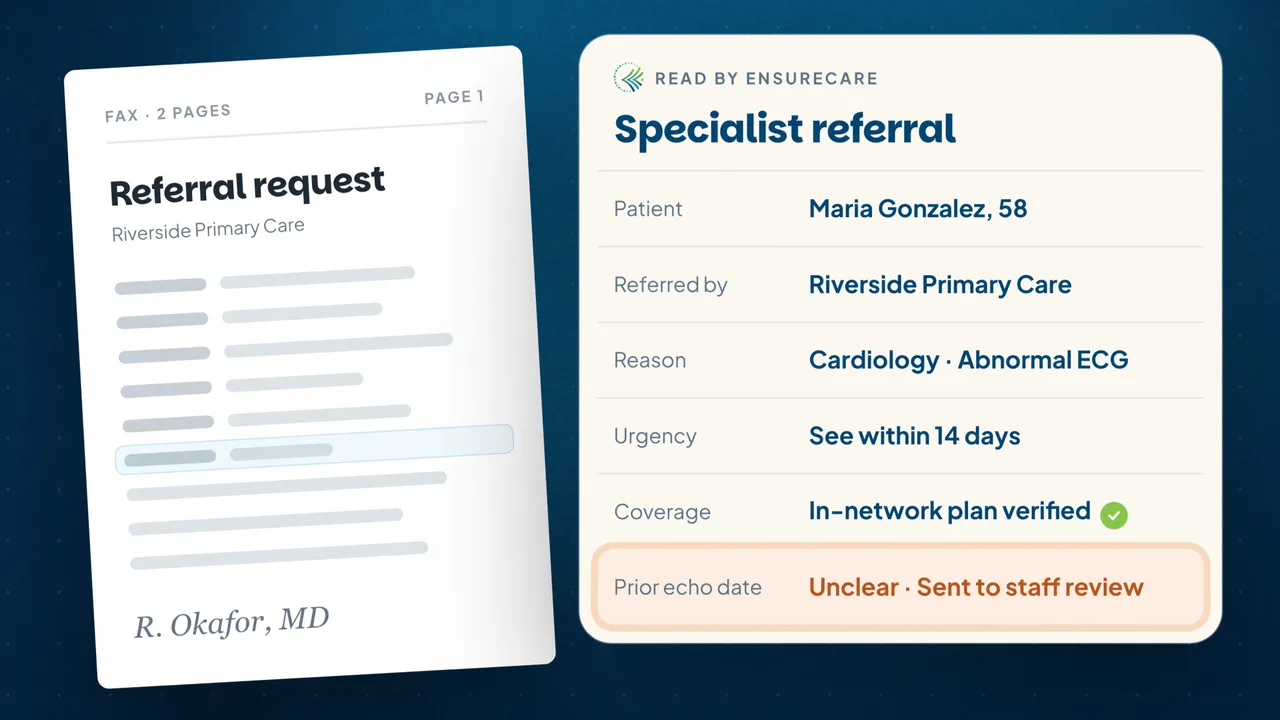 ReferralsHalf of referrals never close the loop. Then comes the friction.
 EnsureCare